Energy Systems of the Future

Initiative of the German Academies of Sciences for a sustainable, secure and affordable energy supply

This is what the future could look like in 2050: Electricity is mainly generated from wind and solar power. Cars are fuelled with electricity or hydrogen. Buildings are so well insulated that they no longer require heating. Technically, all this is possible. But how do we get there? What remains to be explored? And how is the transition towards a more sustainable energy supply to be financed? The Academies’ Initiative “Energy Systems of the Future” (ESYS) provides answers to such questions in position papers and analyses. Since 2013, the joint initiative of acatech, Leopoldina and the Union of the German Academies has been advising politics and society.

Innovative generation and storage technologies, energy markets and energy law, citizens' participation and consumer behaviour - some 600 university and non-university institutes are engaged in energy research in Germany. To this we must add the research and development departments in various companies.

ESYS pools and classifies the expertise of different disciplines and prepares and edits it for political and public discussion. More than 160 experts from academia and industrial research are involved in the initiative in an honorary capacity. Experts from the technical and natural sciences, economics, law, and the social sciences collaborate in interdisciplinary Working Groups.

Experts in the field are likewise involved: Throughout the process, there is a constant exchange between the Working Groups and representatives from politics, the industry and civil society organisations - from the development of the topics to the presentation of the results. Their work is supported by Headquarters.

The energy transition is a highly complex transformation process. If it is to be successfully implemented, different competences need to be pooled. With its interdisciplinary structure, the project ESYS provides a suitable framework to meet this challenge.

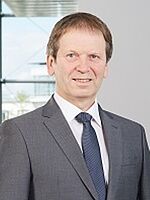
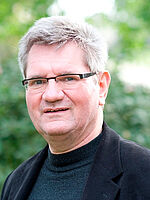
Manfred Fischedick , Wuppertal Institute for Climate, Environment and Energy

ESYS assembles top-level experts from a variety of disciplines. In open, committed discussion panels, they succeed in creating a rare interdisciplinary spirit. The project brings together representatives of scientific and industrial research, thus enabling a holistic consideration of the energy system.

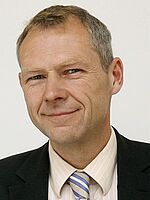
Christian Doetsch , Fraunhofer UMSICHT

There are many aspects that need to be understood and arranged if the energy transition is to be successful. With its interdisciplinary structure, ESYS offers a unique platform, in which it is a pleasure to participate.

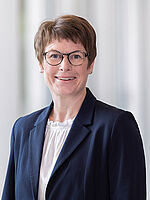
Daniela Thrän , Helmholtz Centre for Environmental Research

ESYS pools the expertise of leading scientists. I consider it a great benefit to be enabled to better understand other perspectives, while contributing the economic point of view. Only by pooling our knowledge can we succeed in comprehensively assessing the challenges of the energy transition.

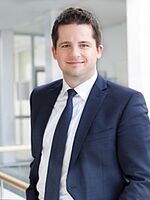
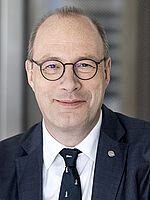
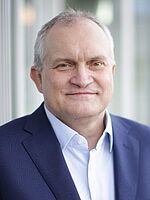
Christoph M. Schmidt , RWI – Leibniz Insitute for Economic Research

As an engineer, I create knowledge we require for the transformation of the energy system. If this knowledge is to reach political decision-makers, it must be appropriately processed and explained. With its publications and dialogue programmes, ESYS enables this transfer.

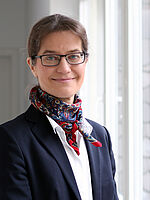
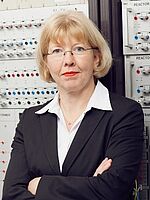
Jutta Hanson , Technische Universität Darmstadt

On the basis of a holistic study of the energy system, the members of ESYS work out possible courses of action. With this approach, they are setting standards. Their work at the interface between academia, politics, the industry and civil society ensures that their political and social propositions are both scientifically sound and practical.

Ortwin Renn , Institute for Advanced Sustainability Studies (IASS)

The initiative is governed and represented by a Board of Directors.

  • Prof. Dr. Andreas Löschel
  • Ruhr University Bochum
  • Chair of Environment/Resource Economics and Sustainability
  • Faculty of Management and Economics
  • Chairholder
  • Prof. Dr. Karen Pittel
  • ifo Institute - Leibnitz Institute for Economic Research / LMU Munich
  • ifo Center for Energy, Climate and Resources
  • Director
  • Prof. Dr. Jürgen Renn
  • Max Planck Institute of Geoanthropology
  • Department Structural Changes of the Technosphere
  • Director
  • Prof. Dr. Anke Weidlich
  • University of Freiburg
  • Department of Sustainable Systems Engineering - INATECH
  • Professor for Control and Integration of Grids, Dean of Studies
  • Prof. Dr.-Ing. Jutta Hanson
  • Technical University of Darmstadt
  • Institute for Electric Power Systems
  • Department of Electrical Power Systems with Integration of Renewable Energy
  • Head


Position papers are adopted by the Board of Trustees prior to publication.

  • Stefan Müller
  • Federal Ministry of Research, Technology and Space
  • Provision for the Future – Basic Research and Research for Sustainable Development
  • Head of Department