News

15. April 2026
Natural hydrogen, also called “white” or “golden” hydrogen, could be extracted from the ground like natural gas and raises high hopes as a future energy source. A new Discussion Paper by ESYS – Energy Systems of the Future, a joint initiative of the science academies, shows that many key questions remain unanswered and that the need for further research is substantial. Under favourable circumstances, natural hydrogen could support the energy transition, most likely at the local level.

03. December 2025
How can the green energy transition advance despite many challenges? This question was discussed at the Freiburg Energy Talks 2025. A paper summarises the findings.

09. July 2025
The heat transition must make progress. An ESYS Discussion Paper identifies action areas to accelerate the transformation of the buildings sector.

25. February 2025
In the future, carbon-neutral carbon sources are required. CCU can be one option, as a new ESYS paper shows.

25. February 2025
Will baseload power plants still be needed for the future electricity supply? The academy project ESYS assesses the situation.

28. November 2024
Nuclear fusion could be a climate-friendly energy source. How soon could nuclear fusion provide energy? ESYS explains the basics.

28. November 2024
The interest in nuclear fusion is currently high. But what is the status quo of nuclear fusion research? ESYS provides an overview.

25. September 2024
Germany still has 22 years to become climate-neutral. The ESYS academy project has investigated how this transformation can succeed.

25. September 2024
Without CO2 storage, we will not achieve climate neutrality by 2045. This also requires an integrated carbon management.

25. June 2024
It's not surprising that more people are wondering how important hydrogen will be in the future. In its latest paper, ESYS explains why.

29. April 2024
What Is the Voluntary Carbon Market – and What Contribution Does It Make to Climate Action? This ESYS Discussion Paper gives an overview.

26. March 2024
How can renewables be integrated into the market? ESYS makes proposals for adapting the electricity market design.

26. March 2024
Is fracking an option for Germany? What are the opportunities and risks of fracking, where are there uncertainties? ESYS gives an overview.

25. March 2024
In a new analysis, ESYS shows transportation options for importing green hydrogen to Germany. Advantages, disadvantages and obstacles are assessed.

11. August 2023
Are blackouts in Germany likely? The academies of sciences provide an overview with an impulse paper from their joint project “Energy Systems of the Future”: what is the difference between a blackout and other power outages? How are the risks of blackouts shifting as the energy revolution advances? And how can we deal with them?

12. December 2022
Earlier this year, the German government adopted ambitious targets to accelerate the growth of wind and solar power. However, there are several barriers to this very necessary expansion of renewables. In a new position paper, the German academies of science set out twelve policy options for removing these barriers so that the required growth rate can be achieved.
29. July 2022
Europe can end its reliance on Russian energy imports within the next few years, according to a discussion paper of the Academies’ Project ESYS. There are three key requirements for this to happen: additional expansion of the gas transmission infrastructure, a reduction in demand for natural gas, and close, finely-tuned cooperation at European level.
22. June 2022
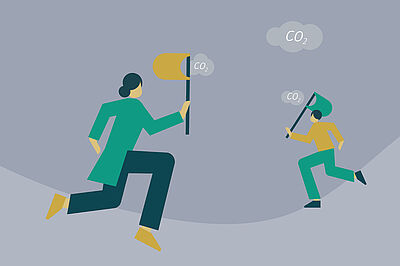
Unavoidable CO2 emissions must be removed from the atmosphere and stored in order to achieve “negative emissions” in this way. What exactly negative emissions are, how they can be generated by nature-based and technological processes, and the advantages and disadvantages of different methods are explained in the new edition of our “In a Nutshell!” format.
14. October 2021
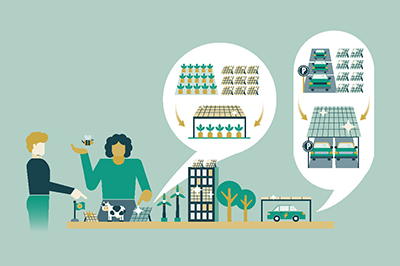
The next four years will be key to Germany’s climate ambitions. During the term of the new parliament, Germany can either choose to drive climate action both nationally and internationally, or it can pass up this chance and stand idly by while the windows of opportunity close one by one. If Germany fails to embark on the right path now, it will be almost impossible to meet the 2030 and 2045 climate targets.
28. January 2020
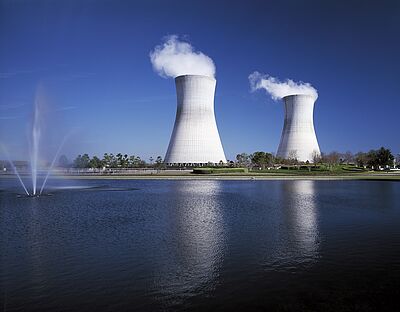
While Germany is committed to shutting down all its nuclear power plants by 2022, other countries such as China, Russia and Japan are increasing the share of nuclear power in their energy mix. What role will nuclear power play in the future of both global electricity generation and climate protection? ESYS provides clear answers to these questions.
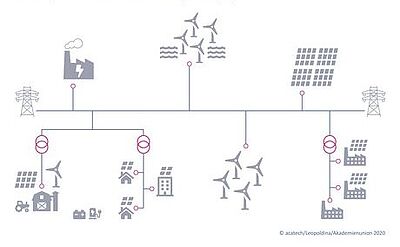
16. January 2020
Astutely combining centralized and decentralized technologies is the only way of ensuring Germany's energy supply will be climate-friendly, reliable and competitive by 2050. This is the conclusion of a position paper published today by ESYS.
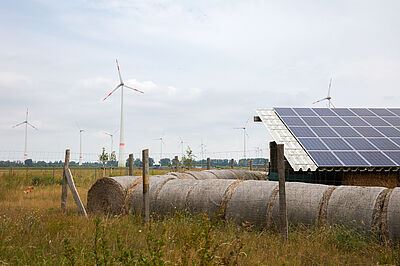
27. May 2019
As the most diverse form of renewable energy, bioenergy can help us achieve the necessary reduction in climate emissions. However, for this to be possible it will need to be produced and utilised more sustainably than is currently the case. This is the conclusion reached by the joint academy project “Energy Systems of the Future” (ESYS) in its Position Paper.
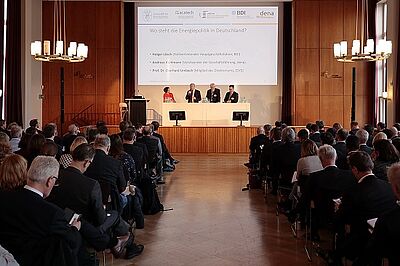
20. February 2019
A joint initiative of the German academies of science project “Energy Systems of the Future” (ESYS), the Federation of German Industries (BDI) and the German Energy Agency (dena) has formulated recommendations in seven action areas, aimed at helping Germany to successfully complete the energy transition and deliver its climate targets for 2050.
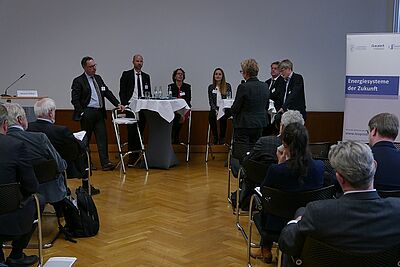
14. December 2018
A climate-neutral EU by 2050 - this is the vision of the EU Commission in its long-term strategy. The new Governance Regulation is intended to help bring EU climate and energy policy together. Will it achieve EU-wide climate targets? The Academies' project "Energy Systems of the Future" (ESYS) states: The EU regulation is an important step, but does not yet pave the way for a climate-friendly European energy supply.
07. November 2018
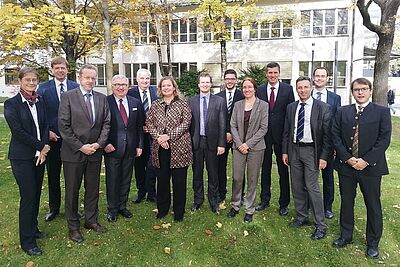
The coalition deal between the Christian Social Union (CSU) and the Free Voters (FW) strengthens the development of renewable energy and promises to enshrine climate protection at constitutional level in Bavaria. How can the coalition partners make this happen? On 6 November, a high-level delegation from the Bavarian Ministry of Economic Affairs, Regional Development and Energy (StMWi) visited acatech’s Munich headquarters to discuss ways of implementing an ambitious energy transition with representatives of the ESYS project.
13. September 2018
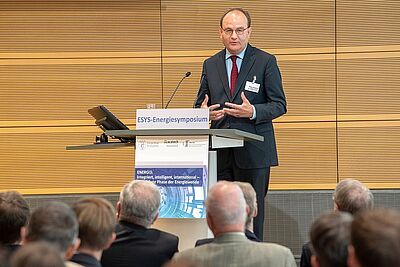
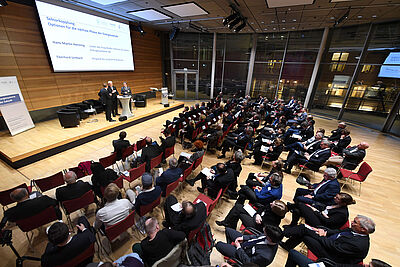
At the ENERGI3 Energy Symposium in Berlin, ESYS scientists discussed with 250 stakeholders from politics, business and civil society what Germany must do to achieve the next phase of the energy system transformation. Which technologies, energy sources and business models do we need, how must the framework conditions change, and do we secure social acceptance?
27. August 2018
Too many fossil fuels, too little advancement: Germany will fall noticeably short of its climate targets if we stay on the same track. Only with an explicit strategic change to more coupling of the sectors can targets be achieved over the long-term, according to ESYS.
13. July 2018
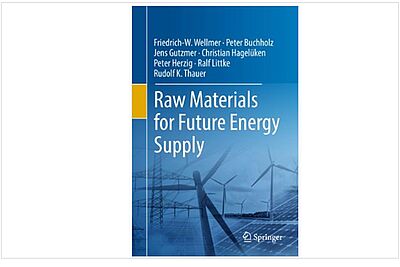
The analysis of the academy project "Energy Systems of the Future" comes to the conclusion that geologically speaking, sufficient raw materials are available. The challenge, however, is to make the supply secure, affordable and environmentally and socially acceptable. The analysis is now published in English by SpringerLink-Verlag.
01. June 2018
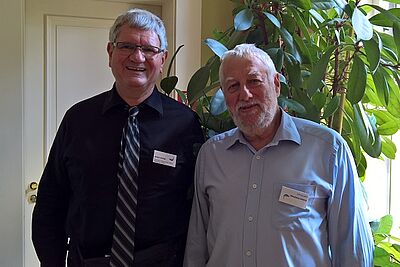
From pollutant to raw material - instead of polluting the atmosphere, CO2 can be captured and used. In the two-day workshop "What potential does Carbon Capture and Utilization (CCU) have?" on 30 and 31 May 2018 in Potsdam, British and German experts discussed the opportunities and risks of using carbon dioxide.
20. February 2018
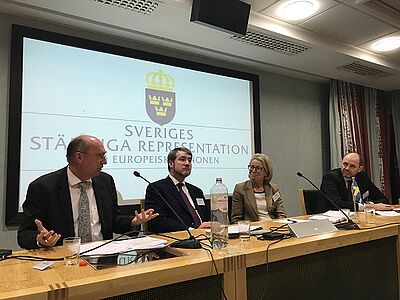
A climate-friendly energy supply can only be achieved with significantly more green electricity. Experts from the EU Commission and international experts from science and industry discussed how to balance the fluctuating electricity load across the EU on 19 February 2018 in Brussels.
14. November 2017
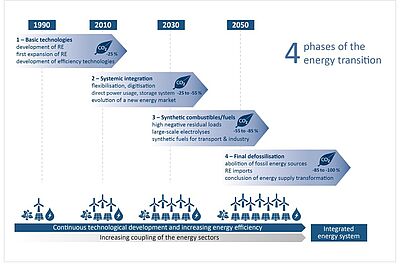
Only with an explicit strategic change to more coupling of the sectors can targets be achieved over the long-term, according to ESYS. In the position paper published today, a more robust interlinking of the electricity, heat and transport sectors and the integration of more renewables into the system is asked for.
24. May 2017
The recent global cyberattack has shown: Digitally interconnected infrastructures are vulnerable. This does not exclude modern, digitally controlled energy systems. Attacks by hackers or terrorist as well as extreme weather conditions threaten the energy supply. How then can a blackout be avoided? In the position paper “A resilient design of the energy System”, the Academies‘ Project “Energy Systems of the Future” (ESYS) provides answers to this question.
23. March 2017
The worldwide conversion of the energy supply systems – away from high greenhouse gas emissions and towards more sustainability – should be monitored by an independent expert committee. This stipulation was put forward by 22 scientists from Germany, China, Australia, Japan and the UK in a food-for-thought paper for the German G20 presidency. acatech supports their common objective.
15. March 2017
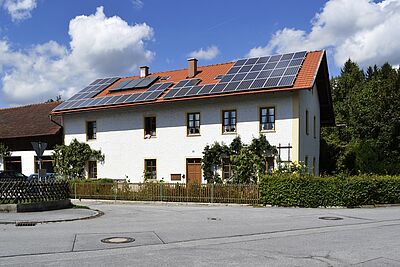
If the energy transition is to succeed, each and every one needs to make an effort. It is not only necessary to save energy, but also to adjust our consumption to the fluctuating feed-in from wind and solar energy sources. So how can consumers be motivated to permanently change their behaviour? A Working Group of the Academies’ Project “Energy Systems of the Future” (ESYS) has analysed the latest research developments and summarised the results in the position paper.
08. February 2017
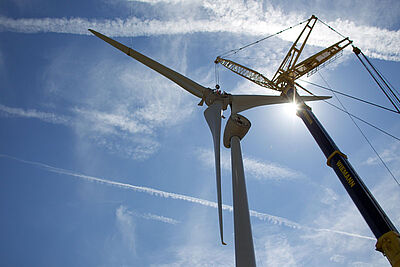
Globally, there are sufficient metals and raw materials for the energy transition. However, the supply depends on the development of commodity prices, the transparency and accessibility of markets and wheather mining operations can fulfil high environmental and social standards. An ESYS Working Group has examined how the supply can be secured long term.
18. March 2016
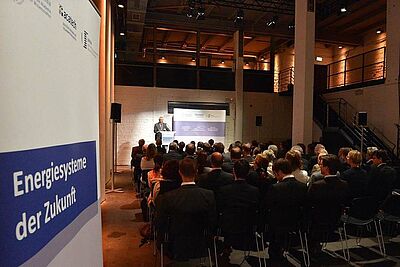
Ten publications on urgent challenges in the context of the energy transition, elaborated by more than 100 experts; accompanying dialogue events with stakeholders from academia, politics and civil society: This is the result of the first stage of the project “Energy Systems of the Future”. The joint initiative by acatech, Leopoldina and the Union of the Academies will continue to develop scientifically sound analyses and position papers for three more years.
11. January 2016
Energy scenarios can greatly influence political decisions. It is therefore of major importance that the calculation models and results are comprehensible and verifiable. In their position paper, acatech – National Academy of Science and Engineering, the German National Academy of Sciences Leopoldina and the Union of the German Academies of Sciences and Humanities advocate the introduction of standards for the generation and use of energy scenarios in policy consulting.
10. December 2015
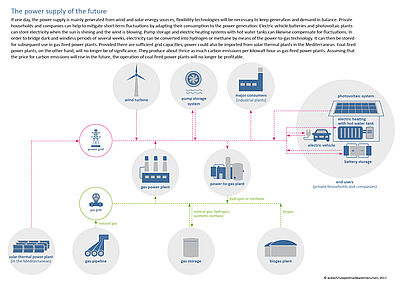
There are various reasonable options how the power supply can be stabilised in the age of renewable energies. There are alternatives to almost every technology, almost all can be replaced at reasonable additional costs. One exception, however, are gas power plants that can be flexibly fired with various gases: They constitute the backbone of any stable energy system of the future. This is the result of a position paper which was elaborated by an ESYS Working Group.
25. March 2015
In order to achieve an effective climate protection, a sufficient number of countries need to reduce their carbon emissions. The European Union should therefore establish an integrated energy and climate policy as an internationally compatible model for other economic regions. The Academies published their position paper in which they advocate a closer interlinking of the German energy transition efforts with the European energy and climate policy.

